Category: Saint-Barthélemy

  • From Africa to the Caribbean: Links To Our Past

    From Africa to the Caribbean: Links To Our Past

    In June my father received a request to share DNA and this isn’t anything new or special because some people do request to share so they can compare their results with yours, I’ve done this myself so I accepted the request but the person that requested the share was surprising.

    This DNA relative was predicted to be a 5th cousin at 10cM but that wasn’t the surprising aspect, what intrigued me was the fact that they were 100% African.

    I know I shouldn’t be so surprised about this since my grandmother was Afro-Caribbean. This is a highly interesting match simply because I had hopes of finding a Ghanaian relative being that my father’s highest African percentage is Ghananian but this person was not Ghananian, they are Angolan.

    My Fathers results vs his DNA relative
    23andme DNA results of an Angolan

    Being that it is such a small match there’s probably no way I’ll ever be able to discover which ancestor was fully Angolan. I assumed that this match would be from my Grandmother’s side since she was the Afro-Caribbean but the shared matches point to my French Grandfather’s side. There are seven matches between my father and his Angolan relative. Of the seven only one is not open to sharing their ancestry composition.

    Of the six relatives open to sharing I was able to view the DNA segments my father shared with these relatives. That particular segment in my father’s chromosome painting is identified as “African Hunter-Gatherer”. Our Angolan relative only has 0.2% African Hunter-Gatherer but people from the Congo Basin are Hunter-Gatherers of South Central Africa. There’s a very good reason why Angolan and Congolese are part of the same category on 23andme, I’ll explain that below.

    Angolan relative is purple
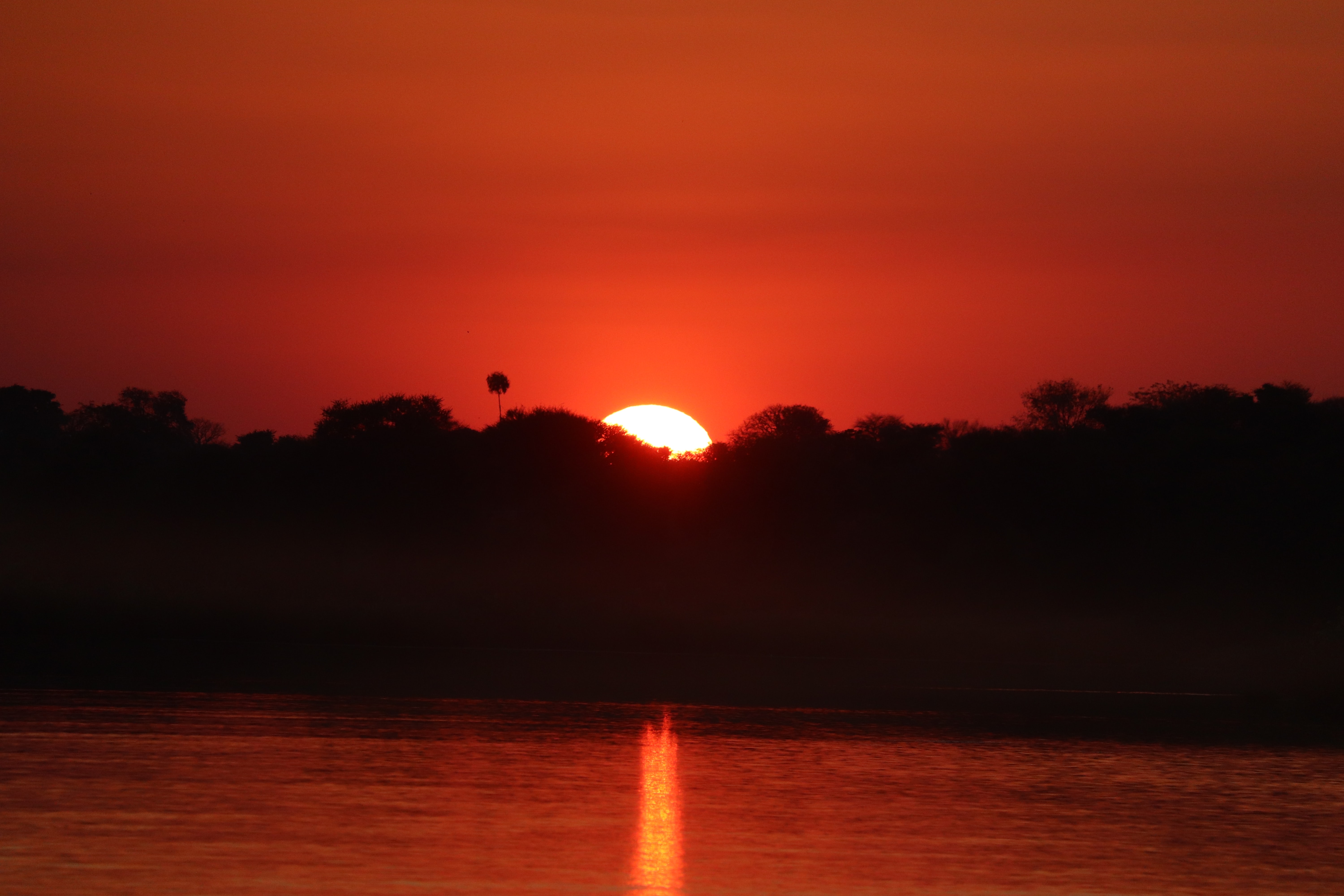
    Photo by Thijs Boom on Unsplash

    Now for a little history on Angola, before the Portuguese colonized Angola, there was a pretty sizeable Kingdom located in central Africa. This Kingdom called Kingdon of Kongo comprised of northern Angola, the western portion of the Democratic Republic of the Congo, the entirety of the Republic of the Congo, and the southernmost portion of Gabon.

    This Kingdom was a highly developed state and had an extensive trading center, frequently traded with neighboring kingdoms were natural resources, ivory, copperware, metal goods, raffia cloth, and pottery.

    In 1483, the Portuguese explorer Diogo Cão landed in the Kingdom of Kongo when he sailed up the uncharted Congo River. Cão left the Kingdom with some Kongo nobles and brought them to Portugal. The Kongo nobles and Cão returned to the Kingdom in 1485. The ruling king, Nzinga a Nkuwu, converted to Christianity. In 1491, Nzinga a Knuwu was baptized and changed his name to João I. Christianity quickly became the religion of the Kongo nobles.

    In the decades that followed, the former traded goods were quickly replaced by human trafficking also known as slavery. The Kingdom has a long history of slavery, one that predates the arrival of Europeans. It’s my belief that this fact is what made it a favorite source for Portuguese traders and other European powers.

    With this little bit of history, we know why on my father’s DNA painting his DNA segment shows up as African Hunter-Gatherer and our Angolan relatives show simply as Angolan & Congolese.

    One of the DNA cousins my father shares with our Angolan relative has two grandparents from St. Vincent and it might mean nothing but in the mid-1700s we had French relatives living in St. Vincent and this is probably where our Angolan ancestor ended up in slavery. It’s just a theory but I know which lines were living there and I’m conducting a little experiment to see if everyone from that line carries a little bit of Angolan & Congolese in their Ancestry composition on 23andme.

  • My Saint-Barthélemy Genealogy Project

    Hey Everyone!

    I don’t remember if I spoke about my Saint-Barthélemy project on Wikitree before but I have one. Which you can view here. It’s basically me researching and talking about the history of the island and its people because my Father’s paternal side of the family is from there. The funny thing about Saint-Barthélemy is that it was a very endogamous place so I’m related to a lot of people in a lot of different ways. There were cousin marriages, double cousins, and half-siblings galore.

    If you’ve never heard of Wikitree before it is a World Family tree that is very source-based, meaning you need solid proof to link to the world tree. It took me about 4 years to connect to the world tree and it was not easy because Caribbean-based profiles were basically nonexistent on the site. Like everywhere else it was mostly American and British profiles, I managed to build up a very good portion of the St. Barts community with the help of distant cousins who entered their branches. This played a major role in me developing my project, I wanted to see how many different ways I’d connect to some of these distant cousins so I set out to put up all the family members of the different branches, I’m not even half done because there are still so many people I haven’t found in the records yet.

    I’ve been able to connect my Grandfather’s line all the way back to Île d’Yeu and Nantes, France. There is one line, my Chapelain line that I just can’t seem to break through, I know my 3x great grandmother Anne Louise Chapelain sometimes spelled Chapelin was born about 1835 in Saint-Barthélemy and she married my 3x great grandfather Pierre LaPlace sometime around 1856, I’m assuming because I have a 2x great uncle named Louis Joseph LaPlace who was born on July 28, 1857, according to his marriage certificate.

    Acte de mariage: Archives nationales d’outre-mer, Etat civil numérisé, Saint-Barthélemy, Gustavia, Mariage (1880), Page 3 (acte n°3), accessed on http://anom.archivesnationales.culture.gouv.fr/

    I could not find any other children for this couple beside my uncle and my 2x great grandfather Gabriel.

    Gabriel was born on March 4, 1862, according to his marriage certificates (he was married twice) and Anne Louise passed away on September 9, 1863. Her death record as you can see doesn’t list any parents for her so I have no clue who they are, I have also not found a marriage certificate for my grandparents.

    Acte de décès: Archives nationales d’outre-mer, Etat civil numérisé, Saint-Barthélemy, Lorient, Tous actes (1863), Page 9 (acte n°13), accessed on http://anom.archivesnationales.culture.gouv.fr/

    What I did find though was a reference to a 3x uncle by name of Joseph Chaplin in the witnesses for Gabriel’s second marriage.

    Acte de mariage: Archives nationales d’outre-mer, Etat civil numérisé, Saint-Barthélemy, Gustavia, Mariage (1888), Page 8 (acte n°9), accessed on http://anom.archivesnationales.culture.gouv.fr/

    This Joseph would be a very young brother so I’m assuming he was a half brother but I can find no other traces of him.

    For now, I’m going to continue with my project and hope that I find something that can help me break down this brick wall.

    Talk to you guys later!