Category: Genealogy

  • Breaking a 16-year brick wall – George Petersen

    My Great Grandmother on my father’s maternal side was Valderia Eugenie Petersen, she was the daughter of Maud Hines and George Petersen.

    I know a lot about Val’s mother and her mother’s maternal family but her father was a mystery because all I had was his name.

    The only reason I even knew his name was because of the index for Valderia’s Social Security Application.
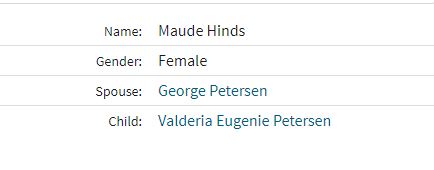
    It has taken me 16 years to finally find his family, with the help of DNA relatives on Ancestry and knowing more about genealogy now than I did when I was 19, I was able to build a family tree of only men with the name George Petersen born between 1870 and 1905. I choose those dates because I knew Valderia was born in 1920 and her father could have been anywhere between the ages of 50 and 15. I have seen very young parents in my searches so 15 is not common but not unheard of.

    I’m getting a little ahead of myself so let me backtrack a bit, before I even began my George Petersen tree I identified DNA relatives from my father’s maternal side of the family and those who were not related to Val’s mother’s side I separated and focused on building branches for them in my own tree with the hopes that I would find the connection but the higher I got on their trees the more I didn’t recognize the names. It was also more difficult because some of them didn’t have any shared connections! They were puzzles that intrigued me. I could see that they were related to each other somehow but my brother just didn’t have the same shared DNA with each of them.

    This is when I got the idea to look for all the George Petersens, and there were so many of them that I just started labeling them I, II, all the way up to XIII. George Petersen XIII (13) was the one!

    His full name was George Henry Petersen born on June 26, 1879, to George Henry Petersen and Lydia Gasper. Gasper also spelled as Jasper and Yasper is a name I’ve seen in my DNA relatives’ trees and I got that lightbulb feeling that this had to be him, he never showed up in any of their trees but his grandmother on his mother’s side was the half-sibling of my brother’s DNA relatives’ 3rd Great grandfather, 4th Great grandfather, and through another side, his mother was the sister of these relatives Great grandmother.

    St. Croix, Danish West Indies, Denmark, Records of Enslaved and Free People, 1779-1921 for George Henry Petersen

    When I entered his information into my tree and attached him as Valderia’s father, I had to wait the next day to check the Thrulines to see if it would show me anything interesting and it did.

    I found 3 other DNA relatives, one of them was only 7cM which I didn’t really pay any attention to because of how small it was and they literally shared no common matches so I had no idea they belonged on my grandmother’s side but it makes me feel good because this meant that I had found the right person.

    Days like these show me why I love Genealogy and pairing DNA testing with it. Conventional Geneaology can only get you so far it’s the DNA that will help you break those decade-long brick walls.

    My focus now will be to find the father of my 2nd great-grandmother, Maude Hines. I know that he has to be a Hynes from St. Croix because I have DNA relatives with the Hynes last name and they share common relatives from my grandmother’s family but they do not match with my grandmother’s father or her most of her maternal side. There’s some overlap which isn’t surprising with the size of the Island but the connection is there and it’s waiting for me, I just have to find it.
  • 23andMe – New African Groups Added to Ancestry Composition

    I know I am late to talk about this but that’s because I’ve been waiting to see if they were doing staggered updates. It seems that everyone who was going to receive this update already received it.

    If you have no idea what I’m talking about back in January 23andMe added new Ethnolinguistic Groups to their Ancestry Composition, basically they were able to narrow down where in Africa your ancestors might have come from based on the number of Africans you matched with. This is very important to the African diaspora because the majority of us have no idea where our ancestors came from.

    The Groups added include Fula & Wolof, Mandinka, Temne & Limba, Mende, Yoruba, Igbo, and so many more, you can read the full blog post from 23andMe here.

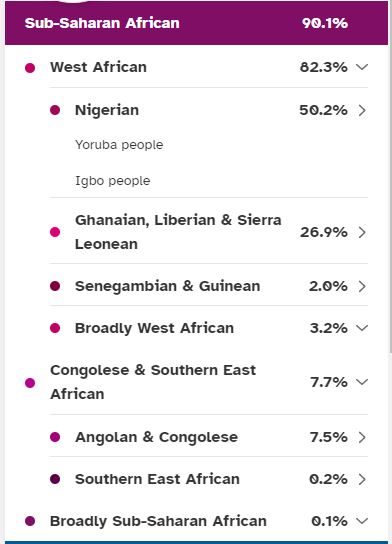
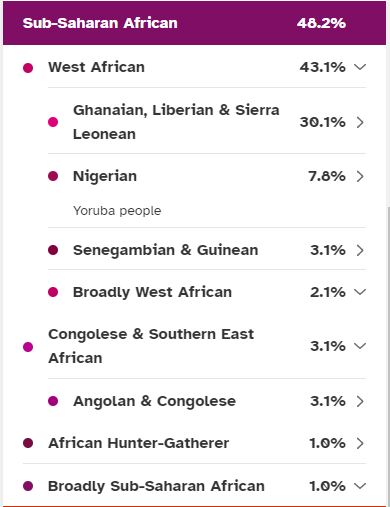
    When I saw someone post their updated results on Reddit I immediately went to 23andMe to check both my father and my accounts. My father’s results were the first I saw, I was hoping to see where in Ghana our family came from but he did not receive a match for there even though it is his largest percentage. Instead, he received a match for the Yoruba people.

    My Father’s Nigerian update

    I clicked over to my account but I didn’t seem to have any matches. I assumed they were rolling out the update to newer accounts first but it’s been a month later and I still have no update. I honestly don’t know how they match the profiles because my father has only one full African DNA relative and he is from Angola, not Nigeria. On the other hand, I have three Nigerian and one Ghanaian DNA relative with direct ancestry from Africa.

    No updates for me

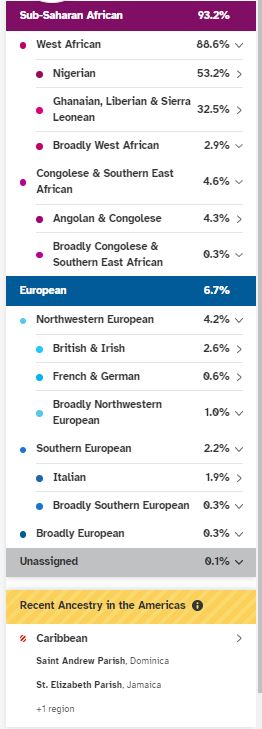
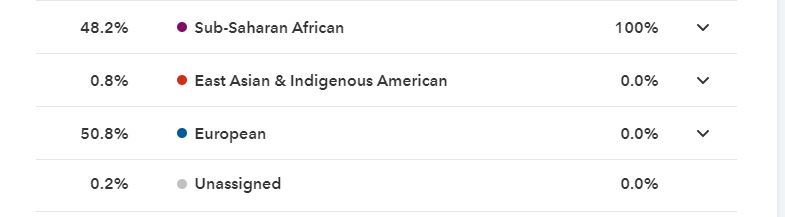
    Interestingly enough, one of my aunts did 23andMe and her results came in just as they released the new groups. She is my maternal aunt and received two groups. Igbo and Yoruba. She’s also mostly African with a small bit of European which further cements the idea that we had Indigenous DNA from my maternal grandmother a tall tale. All my life I’ve been told we had Kalinago ancestry and the fact that there are Kalingao people in Dominica made it seem not unlikely, why would my mother, grandmother lie about such a thing, when I showed my results after phasing with my father my mother told me that one of my aunts said it wasn’t Kalinago but some other Asian, this can’t be true either since it would have shown up in my results, my aunts results, or even my mother and aunt’s first cousin. Both my aunt and their full first cousin show no trace of Indigenous or Asian DNA. So what’s the truth? The truth is more than likely a biracial child they tried to pass off as Asian.

    Aunt Nigerian groups

    I honestly thought my mother’s maternal first cousin would help separate the DNA relatives and he has in a way but like all small Islands, there are overlaps so I’m still stuck trying to figure out how some of these people are related. All I can do at this point is hope that someone who knows more than I do is willing to share what they know.

  • Getting started with Genealogy

    Almost everyone knows about Ancestry when it comes to Genealogy but did you know you can find your ancestors without having to pay?

    Photo by Pixabay on Pexels.com

    Are there really free Genealogy sites?

    This is a question I’ve seen asked by people new to Genealogy all the time, if you are one of these people I’m going to give you the answer to this question you’ve been searching for.

    Yes, there are free Genealogy websites!

    The biggest free Genealogy website is FamilySearch, the site is available in 30 languages, and is completely free. All you have to do is sign up for a free account and you will be on your way.

    I’ve written about using FamilySearch before in my Finding my Roots In The Caribbean and Who are you? Joseph Boldt posts and this site is really essential, not only can you find records that are also available on Ancestry but you can find records that are not on Ancestry. When I’m working on a tree for someone I will usually go to Familysearch and look for the free records before I move over to Ancestry to find the paid sources. If you haven’t created an account on Familysearch I highly suggest you do so today.

    https://www.familysearch.org/en/

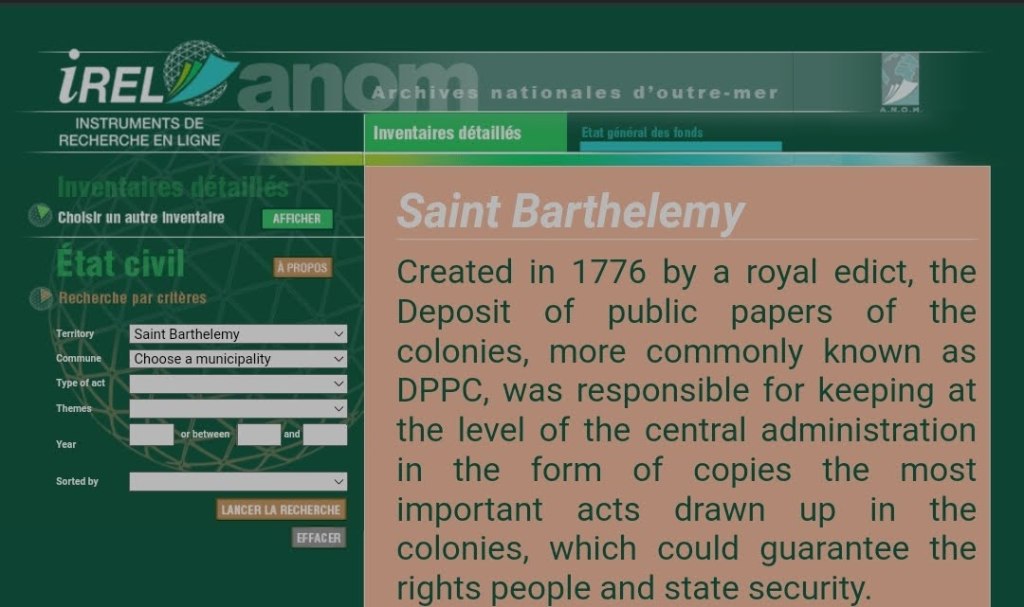
    Because I mainly focus on genealogy for two specific Islands I’ll share with you the sites I use the most. For Saint-Barthélemy and pretty much all the Islands in the French Antilles I suggest using the Archives nationales d’outre-mer or Anom for short. If you are looking for someone born between 1724 and 1905 chances are very good that you find them on here. I will not lie to you but the earlier records are very difficult to read so I’d suggest you be more advanced in genealogy before attempting to look at those records. I do have to mention that for Gustavia the records only go up to 1904, for Lorient it goes to 1905. I keep hoping that they will add more records; the 1910s for instance but one can only hope.

    http://anom.archivesnationales.culture.gouv.fr/caomec2/recherche.php?territoire=SAINT-BARTHELEMY

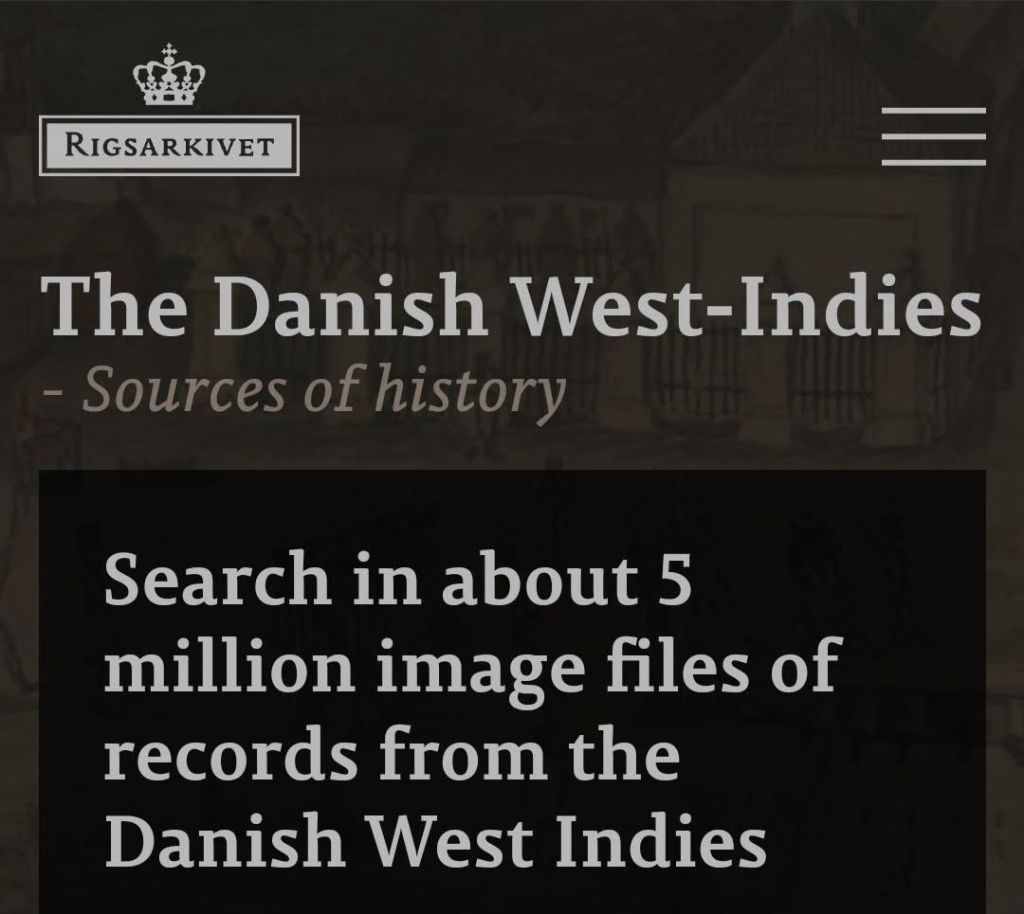
    For the Danish West Indies, I use Virgin Islands History, there are so many records here that it should be one of your first stops when looking for family members from the Danish West Indies, most of it is not indexed but some are, so all you have to do is type in your surname and see what shows up.

    If you are looking for more recent family then visit FamilySearch or Ancestry sometimes you will have to use both as FamilySearch has Church and Census records that Ancestry just doesn’t seem to have.

    https://www.virgin-islands-history.org/en

    I hope this was helpful, and if you have any questions please feel free to leave a comment or visit my Instagram page and send a message there. You can find me on Instagram here :

  • Another piece to the puzzle

    At the end of October, I received from one of my sisters by way of an aunt who got them from my step-grandmother the baptism records for not only my grandfather but also two of his sisters. This was like a gift from the universe because I had pretty much given up on this side of my family tree with little to no information forthcoming. I was at a dead-end and just did not know how to move forward. I put this branch of my tree on the back burner and turned my attention elsewhere.

    I think it was last month or maybe even earlier than that Familysearch released a bunch of indexed records for several Caribbean Islands and Dominica was included, I helped with the indexing but only got records from St. Kitts so I was pleasantly surprised to see Dominica had been included. Unfortunately for me the records included seemed to only be for Saint Patrick parish which I don’t know if either one of my grandparents had family from there. I know they both were born in Roseau which is part of the Saint George parish. I did find a few Xavier in the Saint Patrick parish with a few of the names looking very familiar, one seemed to show up in my brother’s DNA relatives but of course, I have no idea how they are actually related so now I’m attempting to triangulate and group-specific people according to how they are related to my brother and each other. I really need to do my Ancestry test and send it off for that extra connection.

    If you’re interested in looking at the Saint Patrick parish records you can view them here: https://www.familysearch.org/search/collection/4318340

    You will need to sign in to actually search the records, if you don’t have an account it’s very easy to sign up for a free account.

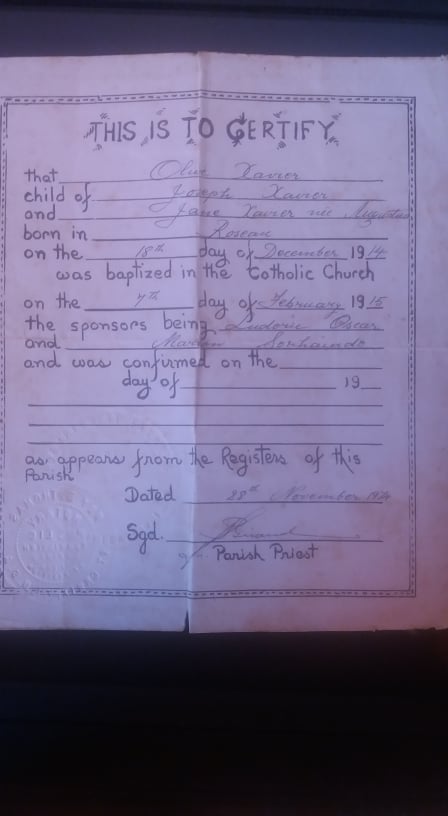
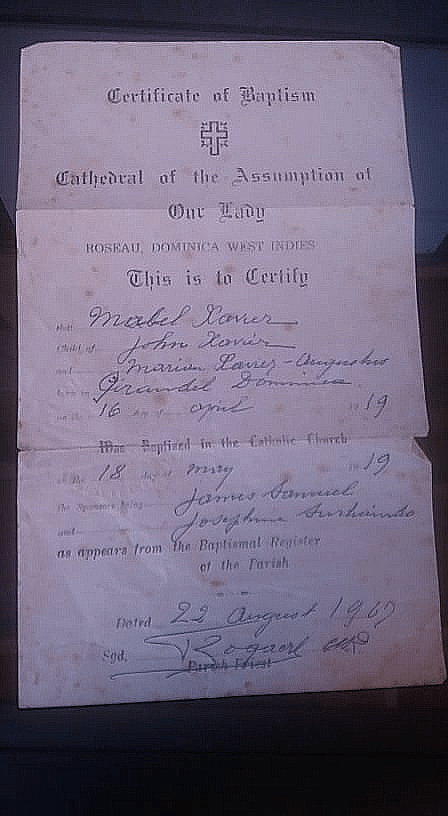
    Here are the baptism records I received (I tried to improve them so it would be easier to view the information, they were very blurry and hard to read before, some of them still are):

    In order of age, we have the baptism record of Olive Xavier, child of Joseph Xavier and Jane Xavier née Augustus born in Roseau on the 18th day of December 1914. She was baptized in the Catholic Church on the 7th day of February 1915. The other names are really hard for me to make out but it looks like her sponsors were Ludovic Oscar and Marian S…?

    The next baptism record belongs to Mabel Xavier, child of John Xavier and Marian Xavier -Augustus born in Giraudel Dominica on the 16th day of April 1919. She was baptized in the Catholic Church on the 18th day of May 1919. Her sponsors were James Samuel and Josephine S…? I think it’s the same last name from the first record but I can’t really make it out.

    The last baptism record belongs to my grandfather, Norbert Anthony Xavier, child of John Xavier and Jane Xavier born in Roseau on the 12th day of June 1931. He was baptized in the Catholic Church on the 12th? day of July 1931. His sponsors were Michael T…? and L…? Nicholson?

    I’m left with so many questions after seeing these baptism records, Are Marian and Jane the same person? Are Joseph and John the same person? If so then John has another name to add, my grandfather told me his father was also called Roderick so here we have a John aka Joseph aka Roderick Xavier who was married to a Marian who might or might not be Jane Augustus.

    I’m hoping beyond hope that Familysearch transcribes the church records from the Saint George parish, they do have it but it’s a film and I have no way of getting to a Family History Center so the only way will be an index. Next year maybe? Possibly? Please?

  • From Africa to the Caribbean: Links To Our Past

    From Africa to the Caribbean: Links To Our Past

    In June my father received a request to share DNA and this isn’t anything new or special because some people do request to share so they can compare their results with yours, I’ve done this myself so I accepted the request but the person that requested the share was surprising.

    This DNA relative was predicted to be a 5th cousin at 10cM but that wasn’t the surprising aspect, what intrigued me was the fact that they were 100% African.

    I know I shouldn’t be so surprised about this since my grandmother was Afro-Caribbean. This is a highly interesting match simply because I had hopes of finding a Ghanaian relative being that my father’s highest African percentage is Ghananian but this person was not Ghananian, they are Angolan.

    My Fathers results vs his DNA relative
    23andme DNA results of an Angolan

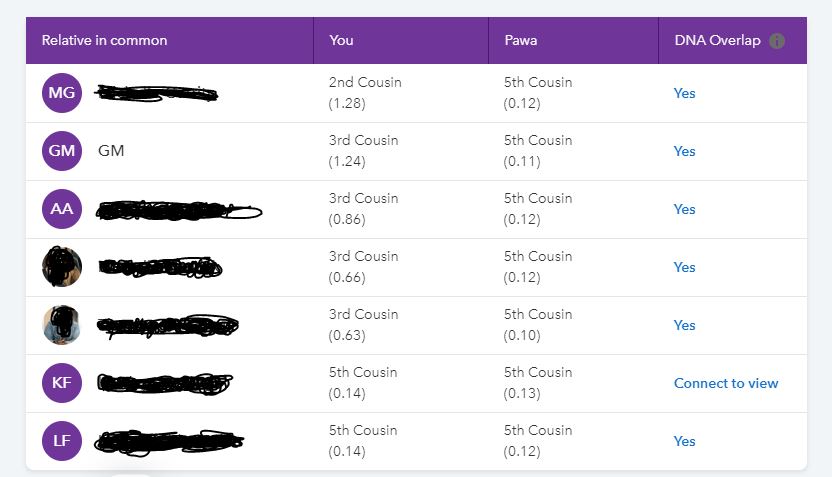
    Being that it is such a small match there’s probably no way I’ll ever be able to discover which ancestor was fully Angolan. I assumed that this match would be from my Grandmother’s side since she was the Afro-Caribbean but the shared matches point to my French Grandfather’s side. There are seven matches between my father and his Angolan relative. Of the seven only one is not open to sharing their ancestry composition.

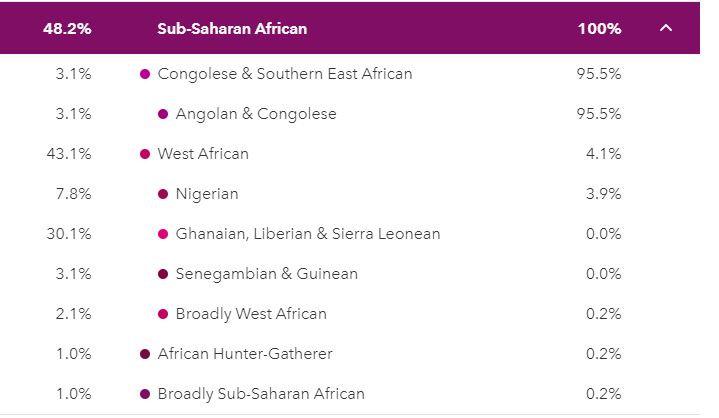
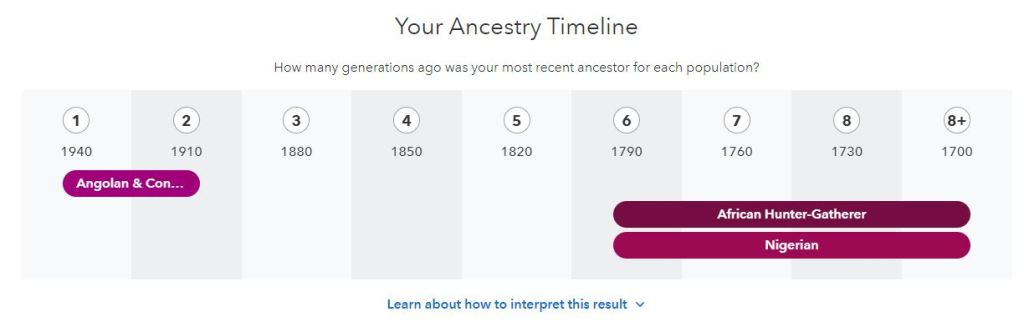
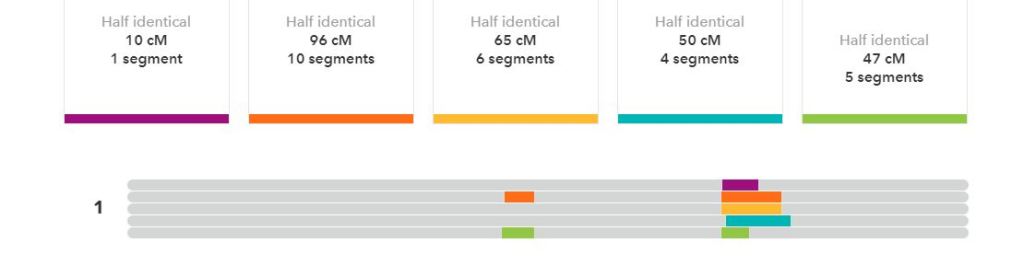
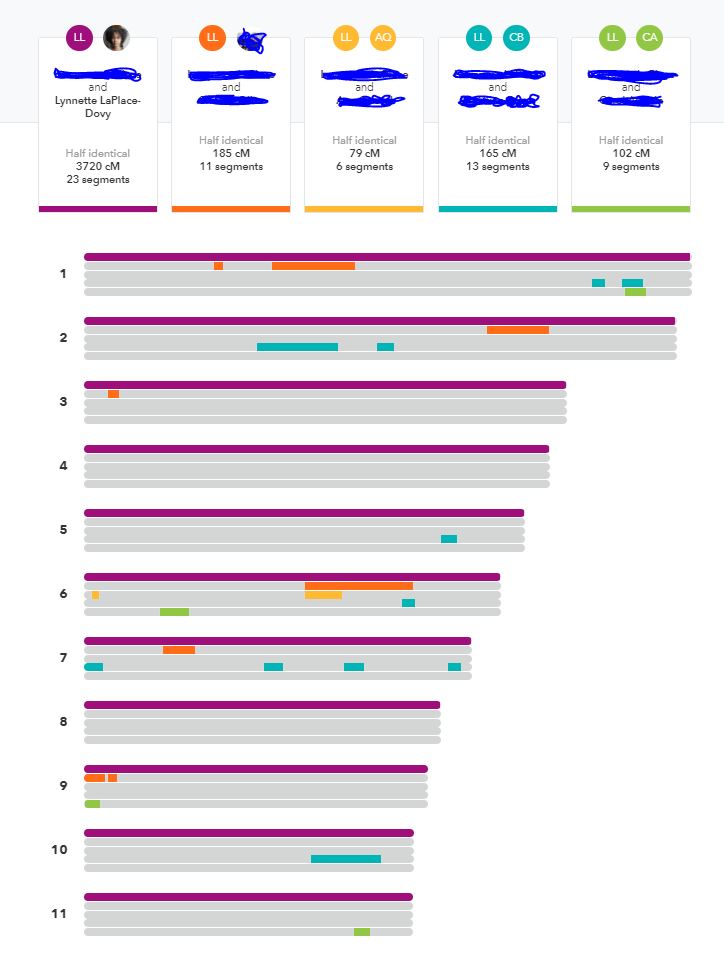
    Of the six relatives open to sharing I was able to view the DNA segments my father shared with these relatives. That particular segment in my father’s chromosome painting is identified as “African Hunter-Gatherer”. Our Angolan relative only has 0.2% African Hunter-Gatherer but people from the Congo Basin are Hunter-Gatherers of South Central Africa. There’s a very good reason why Angolan and Congolese are part of the same category on 23andme, I’ll explain that below.

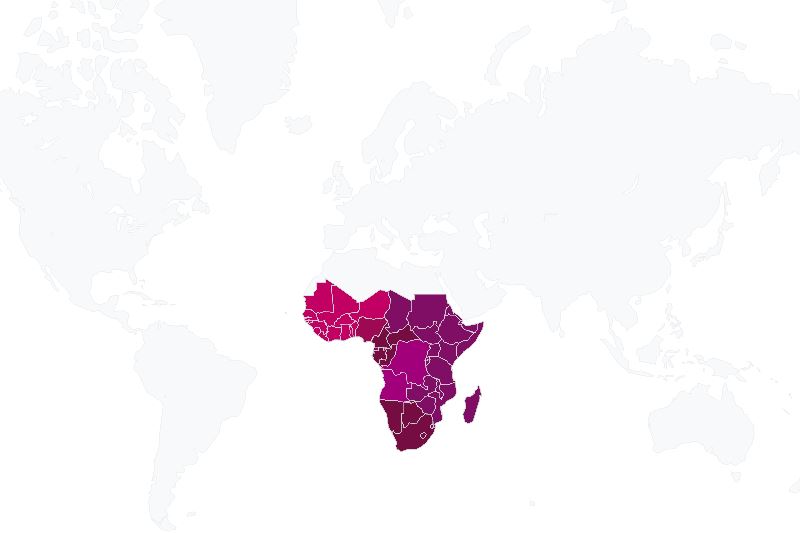
    Angolan relative is purple
    Photo by Thijs Boom on Unsplash

    Now for a little history on Angola, before the Portuguese colonized Angola, there was a pretty sizeable Kingdom located in central Africa. This Kingdom called Kingdon of Kongo comprised of northern Angola, the western portion of the Democratic Republic of the Congo, the entirety of the Republic of the Congo, and the southernmost portion of Gabon.

    This Kingdom was a highly developed state and had an extensive trading center, frequently traded with neighboring kingdoms were natural resources, ivory, copperware, metal goods, raffia cloth, and pottery.

    In 1483, the Portuguese explorer Diogo Cão landed in the Kingdom of Kongo when he sailed up the uncharted Congo River. Cão left the Kingdom with some Kongo nobles and brought them to Portugal. The Kongo nobles and Cão returned to the Kingdom in 1485. The ruling king, Nzinga a Nkuwu, converted to Christianity. In 1491, Nzinga a Knuwu was baptized and changed his name to João I. Christianity quickly became the religion of the Kongo nobles.

    In the decades that followed, the former traded goods were quickly replaced by human trafficking also known as slavery. The Kingdom has a long history of slavery, one that predates the arrival of Europeans. It’s my belief that this fact is what made it a favorite source for Portuguese traders and other European powers.

    With this little bit of history, we know why on my father’s DNA painting his DNA segment shows up as African Hunter-Gatherer and our Angolan relatives show simply as Angolan & Congolese.

    One of the DNA cousins my father shares with our Angolan relative has two grandparents from St. Vincent and it might mean nothing but in the mid-1700s we had French relatives living in St. Vincent and this is probably where our Angolan ancestor ended up in slavery. It’s just a theory but I know which lines were living there and I’m conducting a little experiment to see if everyone from that line carries a little bit of Angolan & Congolese in their Ancestry composition on 23andme.

  • The Reasons why I prefer 23andme over Ancestry DNA

    So many times I’ve been asked if I prefer Ancestry or 23andme and which one would be the best to buy. In answer to the first, personally, I prefer 23andme. In answer to the second, it depends.

    Ancestry is always touted as being the best but for who?

    People with ancestry that is mainly from the United States. If you have ancestry from the Caribbean or Europe you might have more matches with 23andme, MyHeritage, Geneanet, or any of the other lesser-known DNA sites.

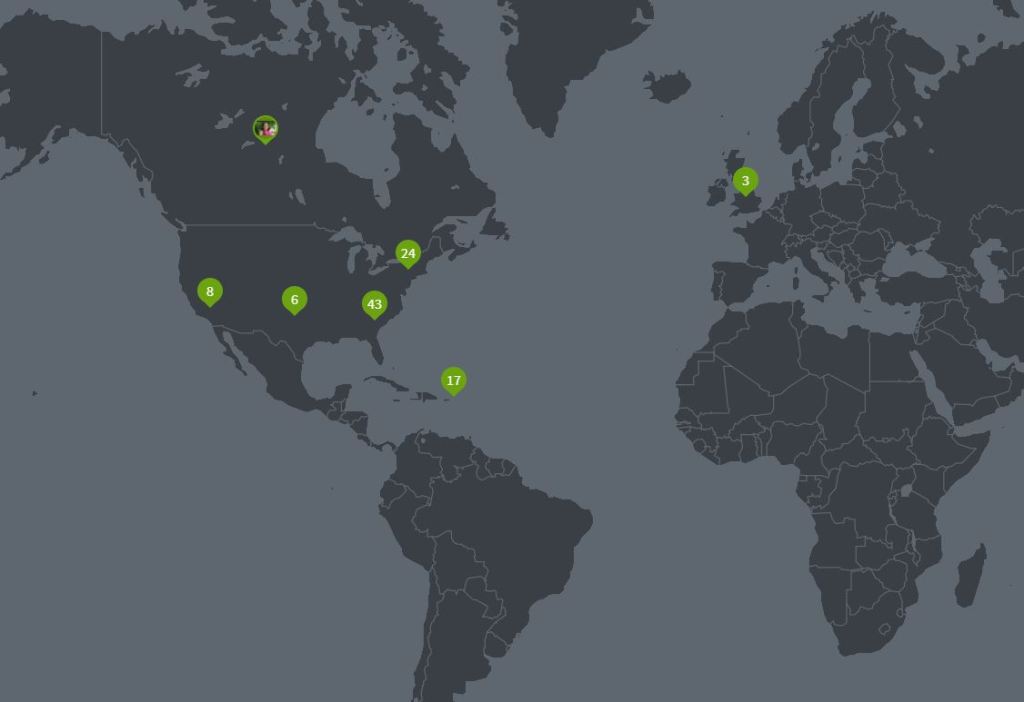
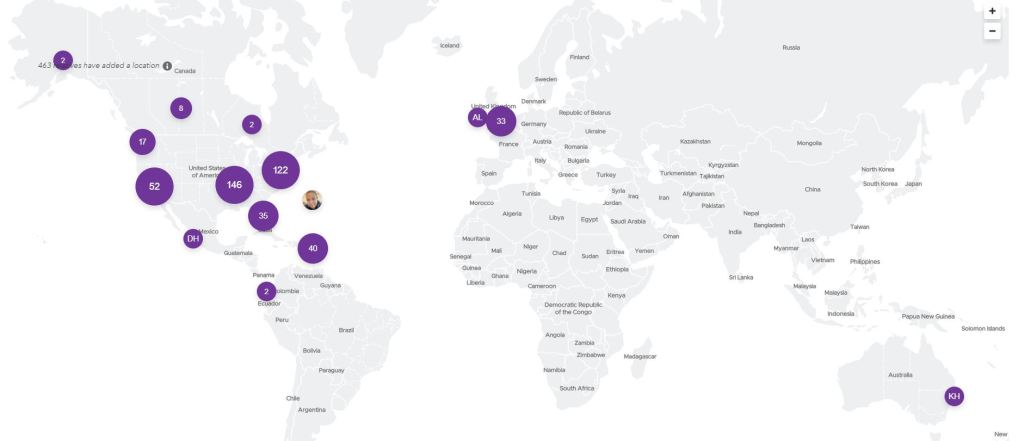
    To show you what I mean I’m going to show you my brother’s DNA map from Ancestry.

    *Not all Relatives opt into sharing their location so there could be some from the locations I’m talking about.

    As you can no doubt see there is 1 DNA relative from Canada, 17 from the Caribbean, and 3 from the UK. All our ancestry is from the Caribbean: US Virgin Islands, Dominica, and Saint-Barthélemy. We should have way more family in the Caribbean, the UK, and France but those testers are just not here at Ancestry. I can find some who moved from those areas to the United States but the ones who never moved are unaccounted for and quite frankly they are the ones that can probably help me break my brick walls.

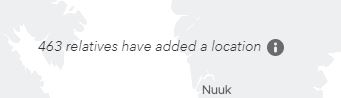
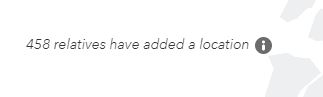
    As a comparison, I’m going to show you my father and my 23andme DNA maps, what I love about 23andme’s map is that it tells you exactly how many relatives did opt into sharing their locations.

    463 out of 1500 DNA Relatives
    458 out of 1501 DNA Relatives

    First, we’ll look at my map.

    Do you see the difference already? 14 DNA relatives in Canada, 40 in the Caribbean, 1 in Mexico, 1 in Central America, 3 in South America, 34 in Europe, and 1 in Australia.

    So, here’s a closer look at my European relatives. 1 from Ireland, 1 from the Isle of Man, 4 from Scotland, 23 from England, 1 from Switzerland, 1 from the Netherlands, and 3 from France.

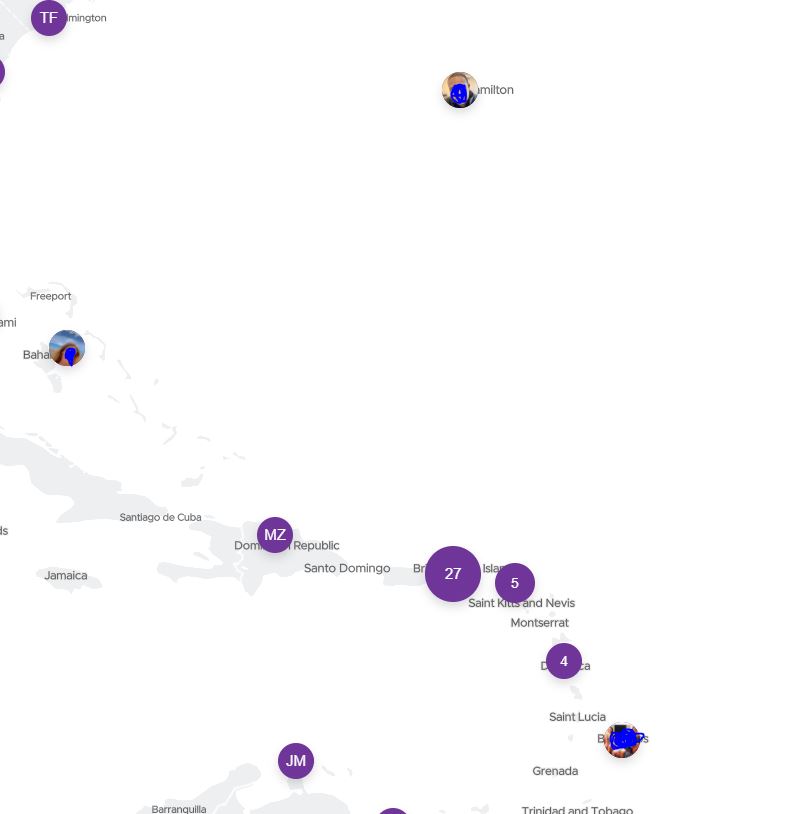
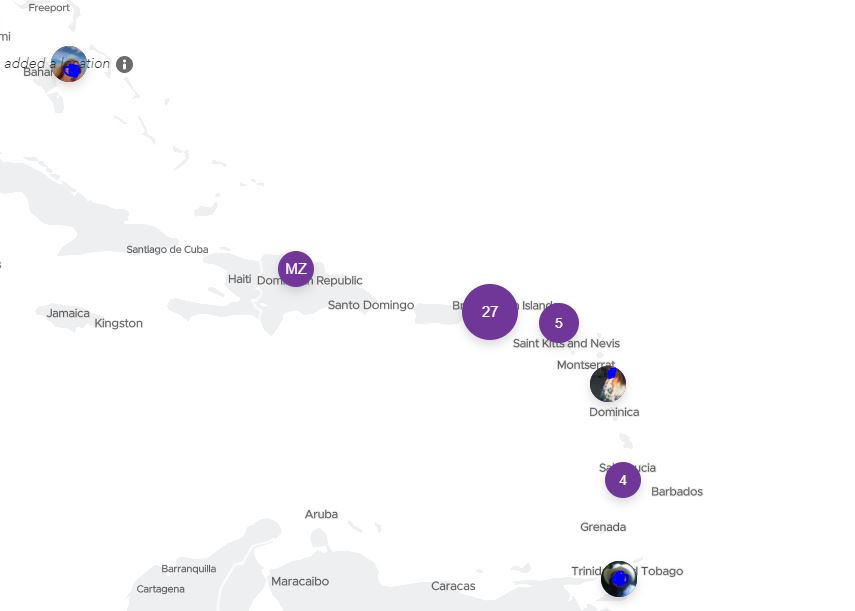
    Now let’s look at those from the Caribbean, 1 from the Bahamas, 1 from Bermuda, 1 from the Dominican Republic, 1 from Barbados, 4 from Dominica, 5 from Anguilla, 1 from Puerto Rico, 1 from the British Virgin Islands, and 25 from the US Virgin Islands.

    Now let’s take a look at my father’s map, 10 in Canada, 1 in Central America, 1 in South America, 40 in the Caribbean, 24 in Europe, 2 in Australia, and 1 in Japan.

    Let’s zoom in on his Caribbean relatives, 1 in the Bahamas, 1 in the Dominican Republic, 1 in Trinidad and Tobago, 1 in Martinique, 3 in St. Lucia, 1 in Guadeloupe, 2 in Saint-Barthélemy, 3 in Sint Maarten, 1 in Puerto Rico, and 26 in the US Virgin Islands.

    Another aspect of 23andme that makes it much better than Ancestry is the Advanced DNA Comparison to several other DNA relatives to see what DNA segments we have in common, Ancestry doesn’t have a similar feature.

    The only issue I have with 23andme is that it doesn’t have a good family tree, there is a family tree option but it is very limited, I can’t do much with it because of all the intermarrying within my family and there is no way to indicate that in 23’s current tree. So, I will usually look at relatives on 23 and then go to Ancestry to try to place them in my tree over there.

    In conclusion test with both if you can. With those two tests, you can upload to the other Genealogical sites and cover all your bases. You will no doubt run into some of the same matches but you might be surprised with some new ones who are not on the major sites.

  • My husband’s 23andme results

    Sometime last year I mentioned to my husband that 23andme was having a sale if he was still interested in doing one. His response if I remember correctly was “Hmmm”, I despise that response because I never know if he was actually listening or not, I guess this time he was because in January he walked in with the 23andme box-like “look what I got”. I had a lot on my mind so I didn’t really pay attention to when he did the test or sent it in but I do remember asking to see it when he got the results.

    I was always interested in what his results would look like. I assumed something similar to my own since his father’s family is from Guadeloupe and my father’s family is from Saint-Barthélemy, Guadeloupe, etc. My mother is from Dominica while his mother is from Benin. 23andme doesn’t have a category for Benin so most of it would probably fall under Nigeria.

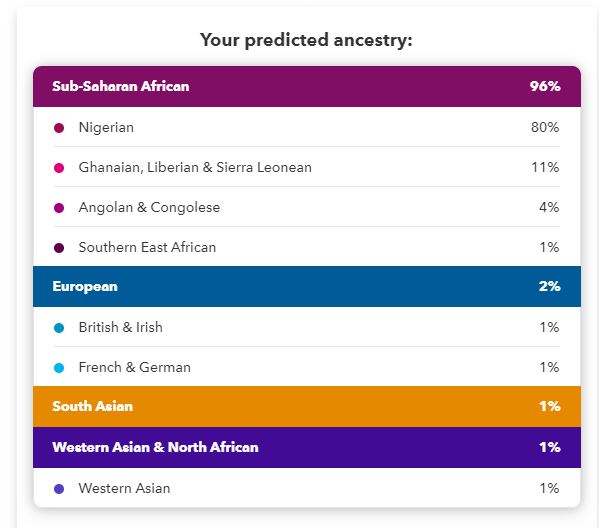
    I tried using 23andme’s Predict my ancestry tool to see what his results might look like since there was no Benin category I used Nigeria for both his mother’s father and mother and Guadeloupe for his father’s mother and father. Here’s what his predicted results look like:

    These results are not very convincing. I’m unsure why his European would only be 2%. The Nigerian is way too high, the South Asian, and WANA are both plausible, and everything else looks possible.

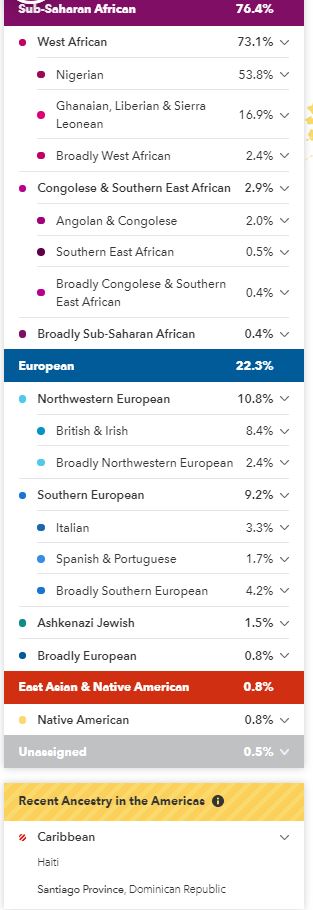
    His actual results kind of shocked me. I have to admit I am not well versed in the history of Guadeloupe but his results are very interesting. Here’s what his results are:

    Did you see what shocked me?

    No?

    His French and German are nonexistent. I really shouldn’t have been surprised as the most recent update hasn’t been very good for people with ancestry from the French Caribbean. I have no idea what the Ashkenazi Jewish is about, my father and some of our other French Antilles relatives have tiny amounts so my next adventure is to learn a bit more about Guadeloupe’s history. I knew the Native American was possible so it’s not surprising. The Recent Ancestry in the Americas did surprise me though. Haiti and the Dominican Republic, one would assume it’s from a French ancestor but I’m unsure since he has a lot of DNA relatives from other Spanish-speaking countries. He does have a few relatives from France, and we are not directly related as I had feared. There was one relative from Guadeloupe with my mother’s maiden name. I know my mother had family that moved to Guadeloupe so he might not be related to me through my father but maybe very distantly to my mother?

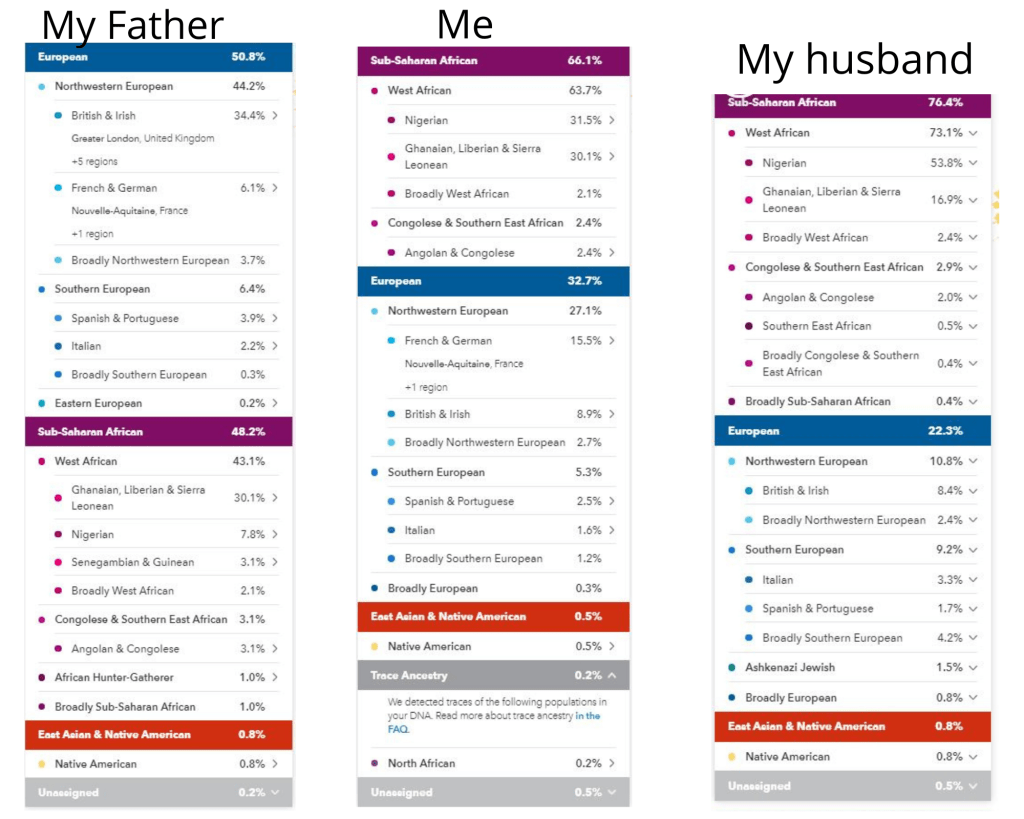
    Just because here is a compilation of My father’s results, My results, and my husband’s results:

  • Who are you? Joseph Boldt

    I wrote about Joseph Boldt before in this post and this one as well. Since those posts, I have done a lot more fact-checking and some stuff is just not accurate anymore. Genealogy as you might not know is very fluid and things you thought you had checked and double-checked could always use a triple check.

    First things first, Joseph and Christina’s first daughter was not Adelaide as I had assumed but Ancilla Boldt, this was not a middle name or nickname but her actual name. Ancilla was born on August 7, 1869, and she passed away on March 18, 1881, when she was 11 years old.

    Burial records 1881 St. Croix, Danish West Indies

    This record was the reason I went back through the records I had for Adelaide and realized that there were records for 3 people. There was Ancilla born in 1869, Adelaide born in 1883, and another Adelaide Boldt born in 1853. I now have Ancilla and my Adelaide accounted for but have no idea who the older Adelaide is. I’ve been trying to build a mirror tree for her but she is a complete mystery to me and I’ve shelved it for a little while. I’m more interested in Joseph and what secrets he has for me.

    So, Joseph, I know was born in the 1840s and his mother’s name was Precill or something close to it so I focused on looking for birthdates with names close to it. I came across this entry:
    Baptism records 1842 St. Croix, Danish West Indies

    The name Sames made no sense to me so I looked at the record more closely and the name is obviously James.

    Joseph was born on April 3, 1842, parents are James and Priscilla from Mt. Stewart.

    This could be his parents, this could be my 5th great-grandparents but I’m not sure. They both have no surnames so I’m assuming they are slaves. I viewed a Session during RootsTech Connect that said slaves took names that had a meaning to them. The name of their master, their master’s mother, or grandmother, whoever it was the slave knew them and took the name for themselves during slavery and kept it. I’m now tracking every Boldt I can find on the Island. Somewhere there has to be a clue.

    Very recently I found some new records that suggest there was another daughter named Rebecca, there’s no image available to view but the Household number leads me to believe this was one of my great aunts.

    Unfortunately, she passed away in 1900 before she could turn 23.

    Burial records 1900 St. Croix, Danish West Indies

    She’s old enough to have had children but I haven’t come across any so far.

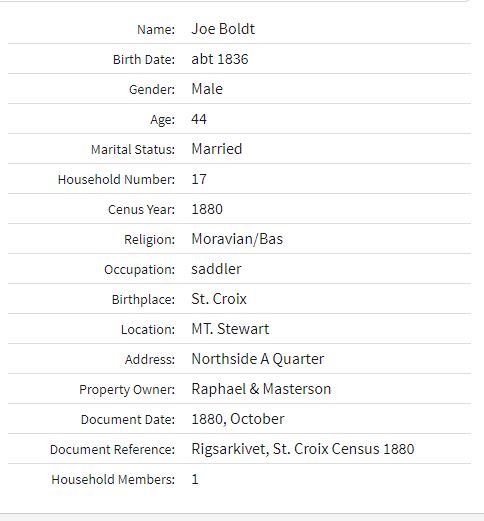
    As for Christina, I think I found some of her family, possibly her father and two aunts. I was looking over the 1870 Census when I noticed a familiar last name, Chamberlain. Family in the Danish West Indies almost always stuck close to each other so it’s telling that the only other family I found with this last name lived right next to Christina and Ancilla.

    1870 Census St. Croix, Danish West Indies

    Going back to Joseph’s parents in the 1870 Census Priscilla shows up as Precill Karen. She’s an Invalid living with her son Joe and sister Magdalene Karen who is also invalid.

    1870 Census St. Croix, Danish West Indies

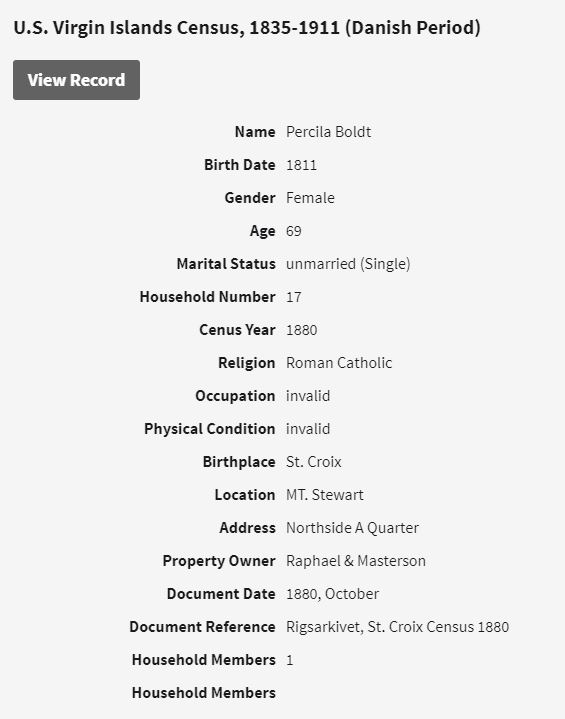
    In the 1880 Census, she is Percila Boldt, there’s no image available for this record so I have if I look at the household number it’s safe to assume she was living with Joseph and his family.

    Percila is very close to Priscilla so even if these specific people aren’t my great grandparents I’m going to refer to Precill as Priscilla from now on.

    I haven’t had much luck finding any other Karens on the Island so it just might be a misspelling. So far the closest names I have found are Caren, Cairnes, Cairns, Karn, Kern, and Keron.

    My Boldt Collection:

    After going through the Census records which include Baptism, Burials, and Marriages I have collected quite a few Boldts to see if I could find a link to my family.

    • James Boldt born on 28 November 1854 in St. Croix, Danish West Indies, he went by the name Bolde while becoming Naturalized in Massachusetts.
    Familysearch

    I have not found a baptism record for him. I did find him in the 1870 Census living in a house owned by Sarah Jane Boldt. I’m still doing research into who this might be.

    I’m now trying to work downwards from the connections I have made but it is very slow going because I’m not sure if they went to other Islands or other countries.

  • New MyHeritage Genetic Groups

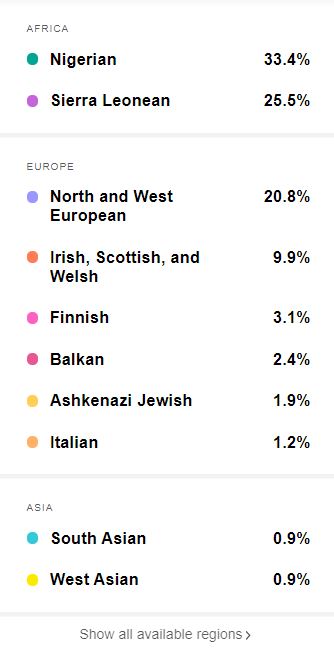
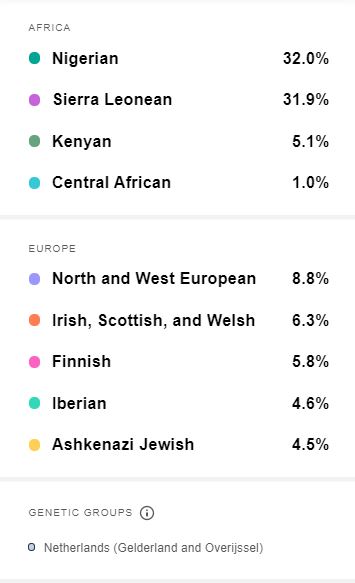
    This being the first day of the new year I thought it only fitting that I write about MyHeritage’s Genetic Groups update that dropped on December 24. They are free to anyone who has taken a test at MyHeritage or uploaded it there. I have three uploads, my 23andme which was uploaded in Sep 2018, my brother’s Ancestry which was uploaded in Mar 2018, and my father’s 23andme which was uploaded in Aug 2020. Since my brother and my uploads were done in 2018 we were grandfathered into having access to most of the DNA tools without having to pay. It’s interesting how both our uploads perform, my brother’s upload has 520 DNA relatives while I have 500. Our father on the other hand has 1,006 DNA matches!

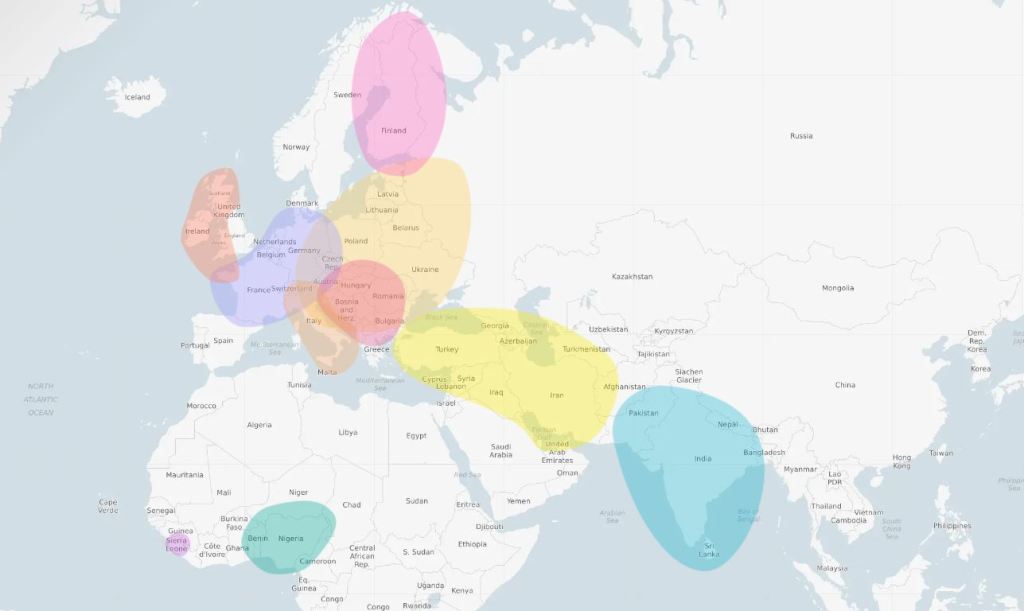
    Here’s my Ethnicity on MyHeritage, I didn’t receive any Genetic Groups, unfortunately, these results don’t really make much sense to me and have never changed since I uploaded them.

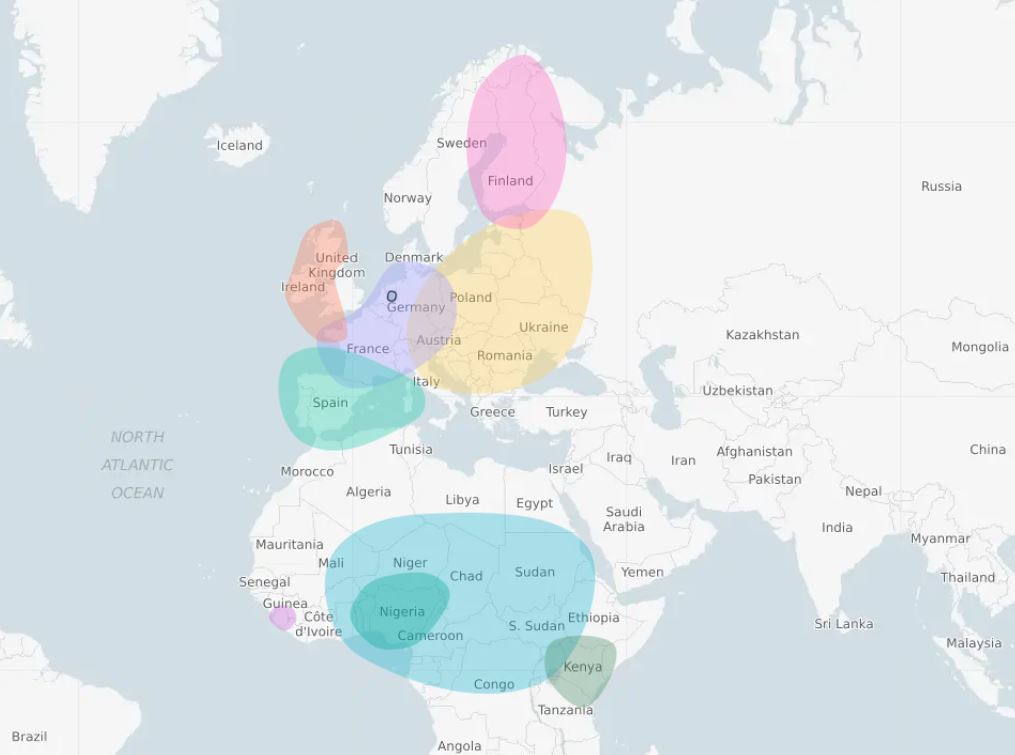
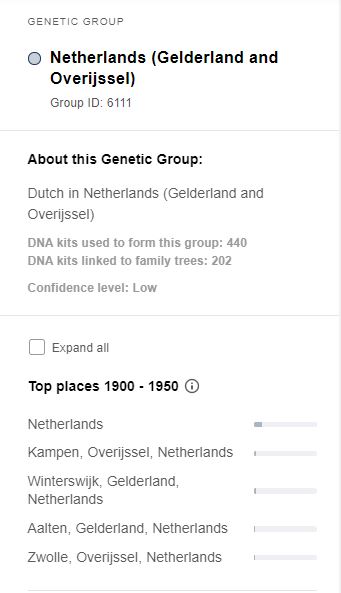
    Here’s my brother’s Ethnicity, he has one Genetic Group in, the Netherlands, which makes sense since I knew we had relatives in the Netherlands.

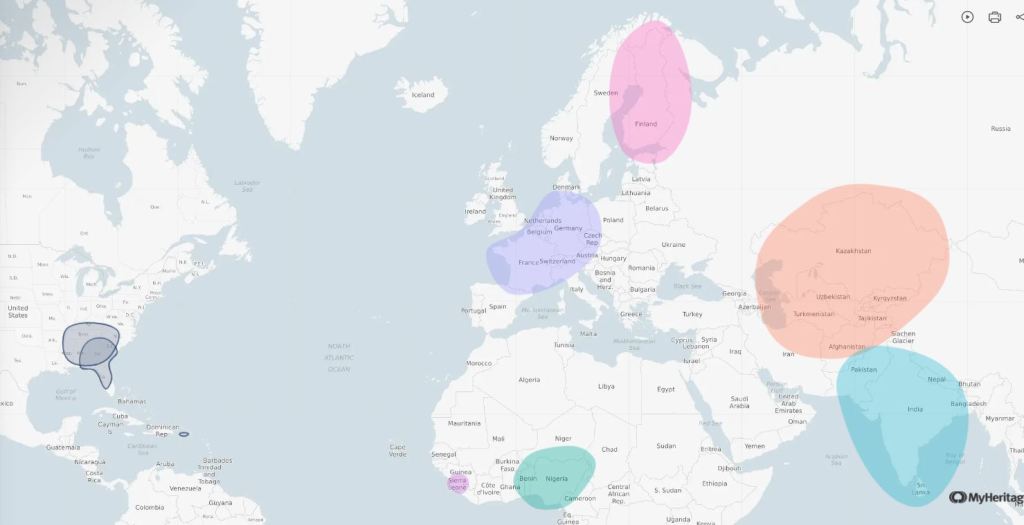
    My father’s upload was stuck behind the paywall because it was uploaded after MyHeritage stopped allowing the free uploads but I never really thought about paying for it since I could see his ethnicities by comparing his account with mine or my brother’s, I have to admit though, seeing that he had 3 Genetic Groups and I had no way of seeing them unless I paid made me very curious. I ended up paying 34,80€ to unlock his DNA results.

    I’m not sure if being able to change the Confidence level of the Genetic Groups is part of the paid DNA account or if it’s due to the fact that there is more than one Group.

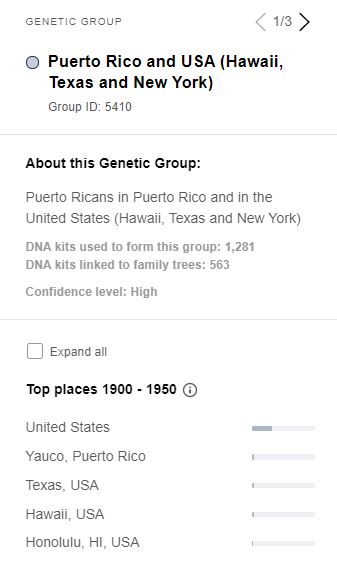
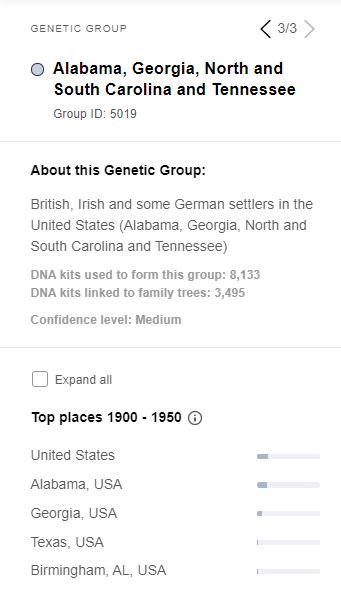
    Puerto Rico and USA Genetic Group make perfect sense as my father has a lot of families that moved to Puerto Rico and then their children later on moved to the USA.

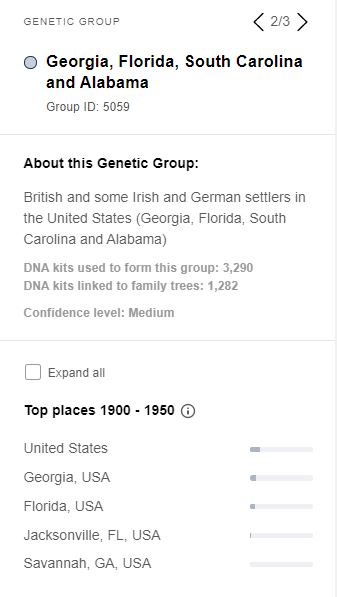
    The other two Genetic Groups I wasn’t expecting if you read the About this Genetic Group section it’s mostly British and some Irish and German settlers, on my father’s paternal side we have a few Irish/British lines so this makes sense.

    In conclusion, the Genetic Groups have been a pleasant surprise just waiting on an update to the Ethnicity because I’m not really sure what could be contributing to the South Asian in both mine and my father’s composition.

  • 23andme Update and More!

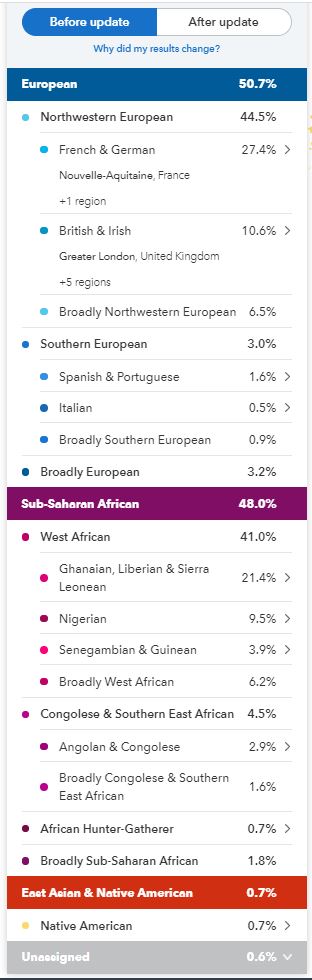
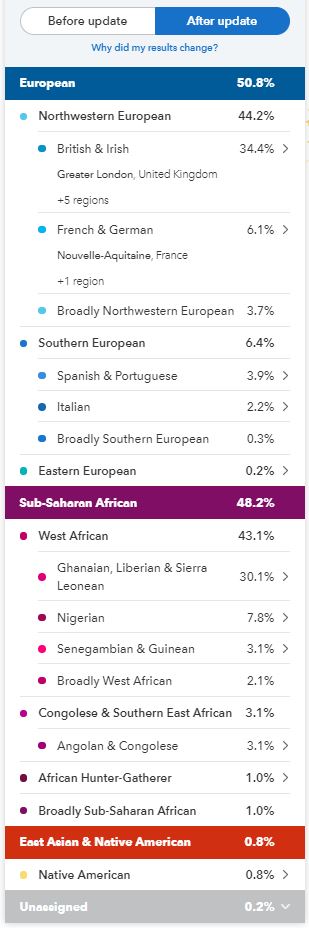
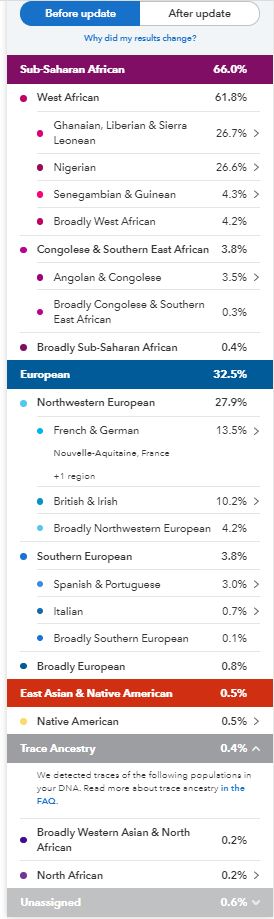
    Like my previous posts, which you can find here, here, and here, I’ll be showing off my new Ancestry Composition (AC). In the last post Phasing my 23andme, you read about how my AC changed when I got a test kit for my father and he finally got his results. This update is, interesting to say the least. My AC I felt was improved but my father’s…well I guess it was improved a bit but the percentages and the categories they ended up in was less than ideal. I know that it is difficult to separate French & German from British & Irish and then you add in the small percentages of Spanish & Portuguese as well as Italian. It makes sense when you think about how often borders have shifted but my father’s AC. I’ll just show you below.

    His F&G and B&I quite literally switched positions and for someone who just got a DNA test, it would seem like his father wasn’t actually his father! It is nice to see most of the Broadly gone and I hope in future updates they can attempt to break down the African regions because there are so many different ethnic groups in Ghana alone. Just by statistics alone, you’d assume that Ghanaian ancestry would be Akan but there’s just no way to tell. Try searching for records you say? That is nearly impossible when you have no idea who the father of your great-grandmother was or not being able to go past a certain point. For instance, my Father’s mother was born in the US Virgin Islands, her mother in St. Croix and her father St. Thomas, her father’s line is a giant mystery. I have been able to track back to my Great Great Grandparents Joseph Alexander Boyles born about 1869 but I have a dead-end there, I don’t know where he was born or who his parents were and I don’t know why the last name went from Boyles to Boynes. Sarah Holm is also a complete blank, she was born about 1880 but I don’t know where or who her parents are. I keep looking in my DNA relatives but those names don’t appear to be shared with anyone else. Makes you wonder. For my other Great Great Grandparents, one side is more researched than the other, George Petersen born in St. Croix (assumed) around ?, I currently have a George Petersen born on August 29, 1881, to Thomas Petersen and mother is unknown. Thomas was born in St. Croix around 1856. Here the line stops, Petersen is a very common surname on the Island and everyone assumes that they are all connected but there’s no proof to this, I don’t even have any DNA relatives with the last name. The more researched side belongs to Maud Hines born in St. Croix on July 28, 1899, to Ann “Annie” Eliza Dorothea Boldt (See the baptism record below)

    https://www.ancestry.com/imageviewer/collections/61567/images/31974_B018842-00011?pId=180825

    Unfortunately, Maud’s father is unknown and the baptism record provides no clues. Ann was born on August 8, 1872, the daughter of Joseph “Joe” Boldt born about 1842, and Christina Chamberlin born about 1846 (Baptism record below)

    https://www.ancestry.com/imageviewer/collections/61567/images/31974_B018798-00047?pId=34581

    I have a lot of DNA relatives for my Boldt line so I was able to verify that I had the right parents. Joe and Christina were married on October 28, 1869, just two months after the birth of their first child Ancilla, who was born on August 7, 1869.

    https://www.ancestry.com/imageviewer/collections/61567/images/31974_B011989-00116?pId=900209832
    https://www.ancestry.com/imageviewer/collections/61567/images/31974_B018795-00023?pId=40889

    So all my Dansk Vestindien lines end here and I have no idea how to break these walls…yet.

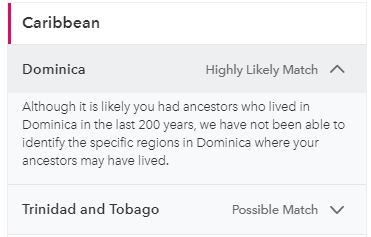
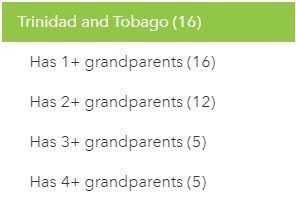
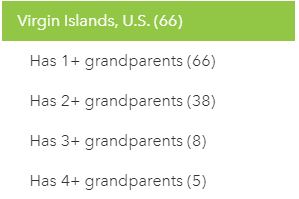
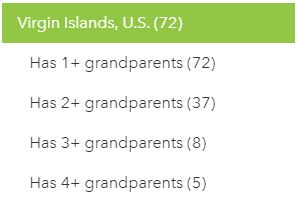
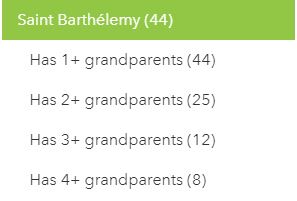
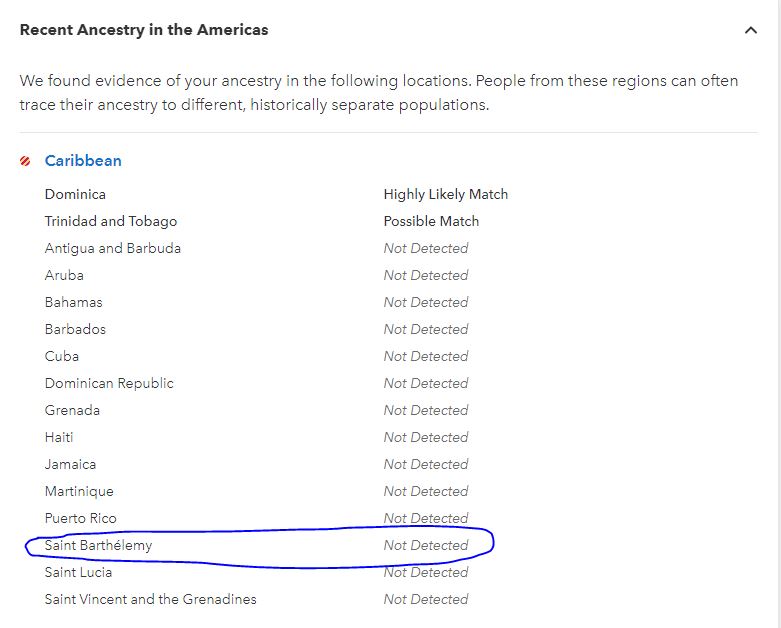
    Speaking of Dansk Vestindien, I’m kind of surprised that 23andme still doesn’t have an option for there in the Recent Ancestors in the Americas category. They didn’t have Saint-Barthélemy before but I spoke about it on the forums and they added it. My father and I don’t have that but I have Dominica and Trinidad and Tobago. My father has no regions for the Caribbean at all and I find that weird because you’re suppose to have at least 5 DNA relatives with all 4 grandparents from that area to get the region but he has more than 5 for Saint-Barthélemy and he doesn’t have the region. What gives 23?

    I know of relatives in Trinidad and Tobago from my father’s side but to actually get the region is surprising until I checked it, I have as many relatives on my mother’s side as I do on my father’s, who knew!

    I’m assuming most of the people from Trinidad and Tobago are from my father’s paternal side because there were a few people who left Saint-Barthélemy and moved to Trinidad. I was contacted by one a few years ago and it was a revelation to me, I had always thought that most left St. Barts for either the States or the Virgin Islands, I was wrong, so wrong. I learned about those who left for Australia, Puerto Rico, the Dominican Republic, St. Lucia, St. Vincent, those who moved back to France. They are quite literally everywhere.

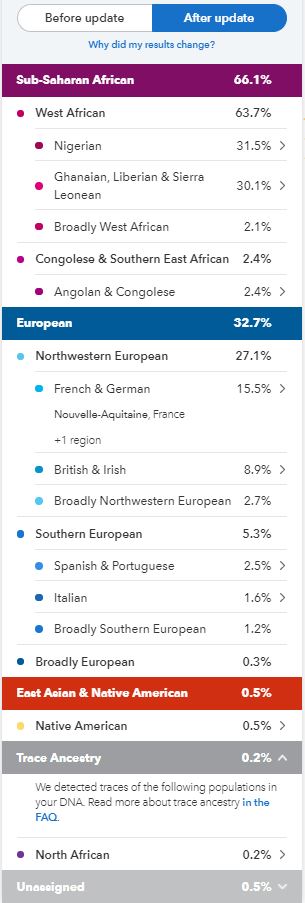
    Here’s my AC update, like I said it was an improvement unlike my father’s.

    Yes, I have Nouvelle-Aquitaine and Occiataine regions for France just like my father, imagine when I first took my test I only had 3.3% French.

    I look forward to seeing what the future will show because they almost always offer something interesting to look at.